Event Marketing: Your Complete 2026 Strategy Guide


Event marketing is the strategic use of live, virtual, and hybrid experiences to promote brands, engage audiences, and drive measurable business outcomes. It spans the full attendee lifecycle, from the first promotional email to the final post-event social post, and it functions as a genuine pipeline driver rather than a logistical support role. Three core components define the discipline: pre-event promotion, engagement design during the experience itself, and post-event follow-up that converts attendee energy into revenue. Platforms like Cvent centralize event management and attendee data, while ActiveCampaign powers the multi-touch email sequences that nurture registrants before and after the event. Experiential marketing, worth distinguishing here, is a subset of event marketing focused specifically on immersive brand interactions; event marketing is the broader discipline that includes virtual conferences, trade shows, product launches, and everything in between.
Promotion: driving awareness, urgency, and registrations across owned, earned, and paid channels
Engagement design: crafting shareable moments, session flow, and onsite experiences that deepen brand connection
Post-event follow-up: converting attendee data and energy into pipeline, referrals, and renewals
What types of event marketing should you consider?
Choosing the right format is one of the most consequential decisions in any event marketing plan. Each type serves a distinct audience relationship and business goal, and the best organizers match format to objective before they spend a dollar on promotion.

B2B events such as conferences, summits, and field events are built around pipeline acceleration and executive relationship-building. They typically require the longest promotion windows, a long promotional window for large conferences, and rely heavily on speaker credibility and agenda depth to justify attendance. Cvent’s event management tools are particularly well-suited here, centralizing registration data, session tracking, and post-event reporting across complex programs.
B2C events prioritize emotional connection and brand affinity. A product launch party, a pop-up activation, or a brand-sponsored festival creates the kind of sensory memory that advertising rarely achieves. The promotional mix shifts toward Instagram, TikTok, and influencer partnerships rather than LinkedIn and email sequences.
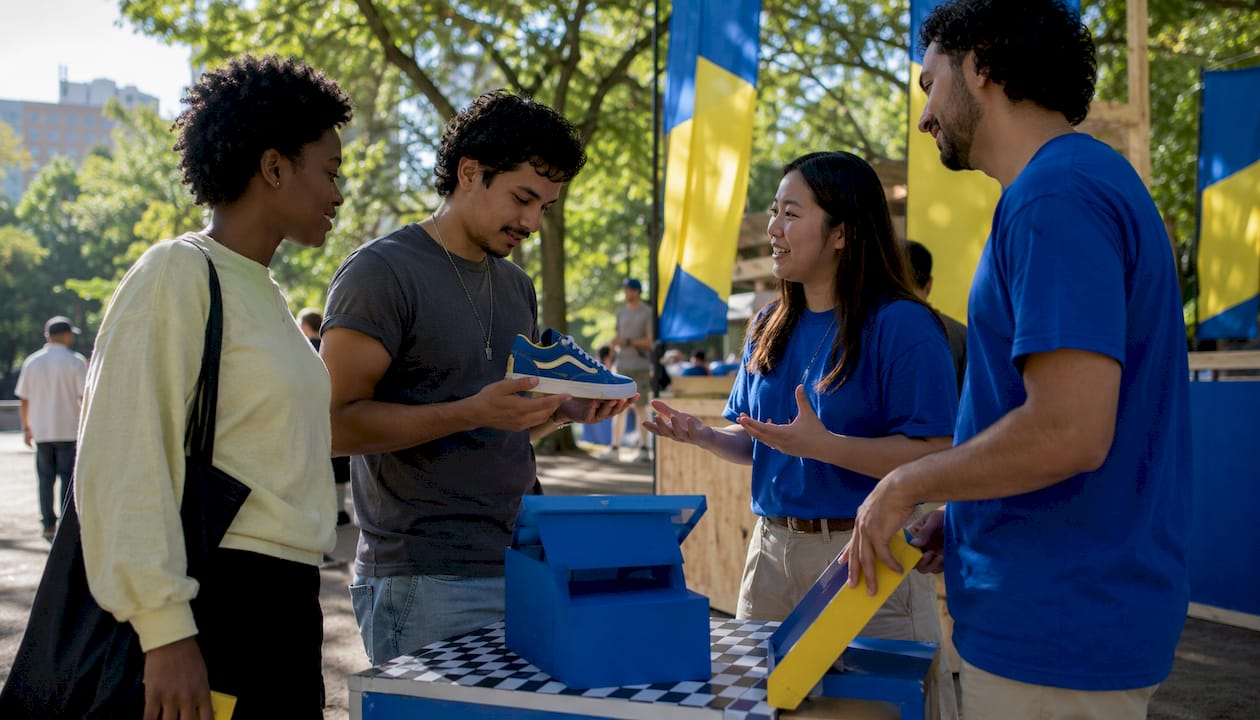
Experiential marketing activations are immersive by design. Think interactive installations, live demonstrations, or co-creation moments where attendees become participants rather than observers. These work especially well for consumer brands seeking to translate visual identity into a physical encounter.
Virtual and hybrid events expanded dramatically in recent years and have settled into a permanent part of the event mix. Virtual formats lower the attendance barrier and extend geographic reach; hybrid formats serve both in-room and remote audiences simultaneously, though they require more production investment to deliver a coherent experience across both contexts.
Trade shows and product launches each carry their own promotional logic. Trade shows demand booth design, pre-show outreach to schedule meetings, and a clear lead-capture workflow. Product launches live or die on the clarity of the offer and the precision of the announcement timing, which is where ActiveCampaign’s segmented email automation earns its place, delivering the right message to the right persona at exactly the right moment.
How to create an effective event marketing plan
A structured plan consistently outperforms ad-hoc promotion. Here is the framework we recommend, built around five phases that apply whether you are marketing a 50-person workshop or a 5,000-person conference.
Define your audience with specificity. “Marketing professionals” is too broad. “B2B SaaS marketing managers who run five or more events per year and struggle with attribution” gives you a target you can actually reach and message. Segment by buyer journey stage, firmographics, and engagement history before you write a single word of copy.
Write your offer in one sentence. This is the step most teams skip, and it costs them dearly. Clear offer statements correlate directly with higher registration and conversion rates. The sentence should name who benefits, what outcome they achieve, and the timeframe: “This event helps B2B demand gen managers build a repeatable event attribution model in one day.”
Build a staggered promotion timeline. Large conferences need an extended promotion window; standard B2B events need a moderate promotional window; shorter windows for webinars. Launch with a teaser rather than the full agenda. A teaser builds curiosity; a full agenda invites objections. Release speakers, agenda highlights, and social proof in waves throughout the window.
Activate multi-channel promotion across owned, earned, and paid media. Email remains the highest-converting owned channel, with warm segmented lists achieving significantly better conversion than cold outreach. Earned channels, particularly attendee-driven social sharing, convert registrations at a notably higher conversion rate because peer recommendations carry implicit trust. Paid channels like LinkedIn ads reach the right professional audience for B2B events but cost a moderate amount per qualified registration, so use them to extend reach after owned and earned channels are fully activated.
Optimize your registration page for conversion. One page, one call to action, three short sections: who it is for, what they leave with, when and where. Every additional form field reduces conversion significantly(https://attendir.com/blog/event-marketing-strategy-framework), so ask only for what you genuinely need. Test mobile first, always.
Align budget to channel performance. Prioritize earned and owned channels first because they produce the cheapest registrations. Allocate paid budget to fill gaps and retarget warm audiences who visited the registration page but did not convert.
Integrate your tools and track from day one. When your registration platform feeds directly into your CRM and your advocacy tools pull confirmed attendee data automatically, you can run nudge sequences without manual list exports. Build your attribution dashboard before promotion launches, not after.
Pro Tip: Write your offer sentence before you design a single creative asset. If you cannot summarize the event’s value in one clear sentence, your audience will not be able to either, and no amount of ad spend will compensate for that ambiguity.
What does successful event marketing look like in practice?
The most instructive examples are not the ones with the biggest budgets. They are the ones where strategic clarity produced outsized results.
Consider a mid-size B2B technology conference that replaced its standard “register now” email blast with a five-touch sequence built in ActiveCampaign: a teaser announcing the date and two anchor speakers, a full agenda reveal three weeks later, a speaker spotlight email, a social proof email featuring registration milestones, and a day-before reminder. Each email included one shareable asset. The result was a registration page that converted warm list visitors at a moderate to high rate typical for segmented email campaigns, compared to the low rates seen with undifferentiated blasts.
Product launch events offer a different lesson. The brands that generate the most post-launch momentum treat the event itself as a content factory. They decide before doors open which sessions get filmed, which moments get photographed, and who collects quotes for the recap. That content then fuels 30 days of post-event distribution: one quote per day, one clip per week, one full recap blog. The long tail of registrations for the next event often originates from this content.
Sponsors represent one of the most underused distribution networks in event marketing. Every sponsor has an email list, a LinkedIn following, and a sales team. When sponsors share co-branded event content, they are effectively doing your marketing in front of an audience that already trusts them. The organizers who build this into their plan from the start, rather than treating sponsor promotion as a bonus, consistently fill seats more efficiently than those who rely on paid ads alone.
How do you measure event marketing success?
Measurement is where most event teams leave money on the table. They track registrations and impressions, declare victory or defeat, and move on. The metrics that actually inform strategy are more granular.
Registration conversion rate: visitors to registrants, with benchmarks of benchmarks of moderate range conversion rates for owned and paid channels
Cost per registration: total marketing spend divided by registrations acquired; the target is below ticket value
Advocacy conversion rate: the percentage of advocate shares that become registrations, with a healthy target of one new registration per several shares
Channel attribution: registrations by source, tracked via UTM parameters and unique referral links
Pipeline generated: revenue attributed to the event, with a healthy target of several times the event cost in pipeline generated
KPI | Benchmark | Why it matters |
Registration conversion rate (owned) | moderate to high for warm segmented lists, low for cold email | Measures email and website effectiveness |
Registration conversion rate (paid) | 5% | Benchmarks paid channel efficiency |
Cost per registration | Below ticket value | Signals sustainable acquisition economics |
Attendee sharing rate | — | Tracks earned channel activation |
Share-to-registration ratio | 1 per 3–5 shares | Quantifies advocacy channel ROI |
Pipeline generated | several times the event cost in pipeline generated | Ties event spend to revenue outcomes |
Attribution is the hardest problem in event measurement. Most teams rely on last-touch attribution, which systematically undervalues organic and advocacy channels because those shares happen off-platform. The solution is unique referral links per advocate, speaker, and sponsor, so you can credit each registration back to its actual source. Without that granularity, you risk cutting the channel generating your cheapest registrations simply because it does not appear prominently in your paid dashboard.
Review metrics during promotion, not just after the event. If one speaker’s announcement email outperforms the others by a wide margin, send a follow-up spotlight on that speaker before the window closes. Real-time optimization is only possible when the dashboard is built before the campaign launches.
Aligning event marketing with sales and defining a clear offer
The single most common reason events fail to attract the right audience is misalignment between sales and marketing. When sales and marketing teams do not share pipeline and demand goals, event marketing becomes a support function rather than a growth engine. The fix is structural: involve sales leadership in audience definition before the event is announced, not after registration opens.
Executive buy-in matters for the same reason. When leadership understands how the event maps to revenue goals, they prioritize it as a business objective rather than a marketing line item. That prioritization unlocks resources, internal promotion, and cross-functional cooperation that no external ad budget can replicate.
The offer clarity problem deserves its own attention. Most event pages describe the event rather than the outcome. They list speakers, session titles, and logistics without ever answering the question every prospective attendee is silently asking: “What will I be able to do after this that I cannot do now?” The teams that answer that question in one sentence, prominently, above the fold, consistently outperform those that bury the value proposition in paragraph three.
Pro Tip: Treat your speakers and sponsors as distribution partners from day one. Give every confirmed speaker a branded “I am speaking at” graphic and a pre-written LinkedIn caption. Most will post within 24 hours, reaching a targeted professional audience you could not buy with any paid channel.
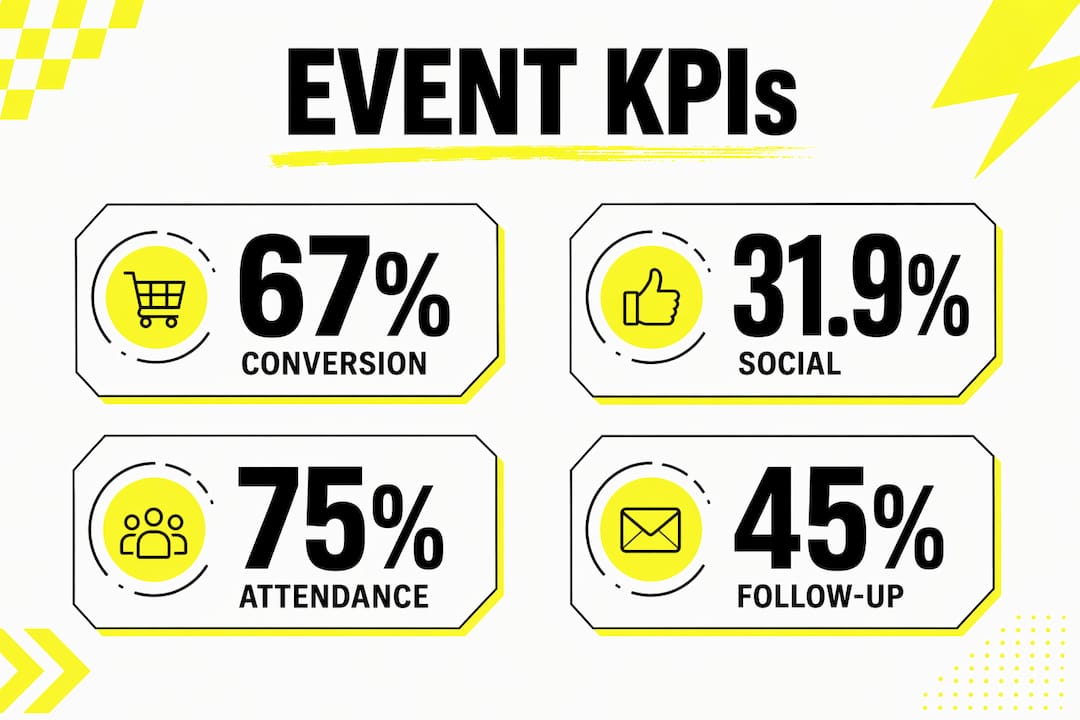
Attendee-driven social sharing converts registrations at approximately 31.9%, far exceeding the rates typical of paid ads or standard email campaigns. The best advocacy programs automate personalized share assets for attendees and sponsors, reducing the friction that prevents most people from sharing at all. When sharing requires one click rather than original content creation, sharing volume rises and so does its registration impact. For a deeper look at how social media promotion integrates with this kind of advocacy, the principles transfer directly to event contexts.
Legal and compliance considerations in event marketing
Event marketing operates within a web of legal obligations that vary by event type, geography, and audience. Ignoring them is not just a compliance risk; it can derail a campaign entirely.
Data privacy is the most pressing concern for most organizers. Collecting registration data in the United States means navigating state-level privacy laws like the California Consumer Privacy Act (CCPA), which grants California residents rights over how their personal data is collected and used. If your event draws international attendees, the EU’s General Data Protection Regulation (GDPR) applies to those registrants regardless of where your organization is based. Your registration page must include a clear privacy notice, and your email sequences must honor unsubscribe requests promptly.
CAN-SPAM and TCPA compliance govern email and SMS promotion respectively. Every promotional email must include a physical mailing address, a clear unsubscribe mechanism, and honest subject lines. Text message campaigns require explicit prior consent, and that consent must be documented.
Venue and vendor contracts deserve legal review before signing. Force majeure clauses, cancellation penalties, and liability provisions can expose organizers to significant financial risk if an event is postponed or canceled. Intellectual property rights for recorded sessions, speaker content, and event photography should be addressed in speaker agreements before the event, not after.
Accessibility requirements under the Americans with Disabilities Act (ADA) apply to physical venues and, increasingly, to virtual event platforms. Captions, accessible registration flows, and venue compliance are not optional for US-based events.
Post-event follow-up and lead nurturing strategies
The event ends when the lights go off. The marketing does not. Post-event engagement is where deals get closed or quietly dropped, and most teams underinvest in it relative to pre-event promotion.
The first 24–48 hours are the highest-leverage window. Attendees are still energized, conversations are fresh, and your brand is top of mind. A personalized thank-you email with a recap graphic, a link to session recordings, and a clear next step, whether that is a product demo, a content download, or a save-the-date for the next event, converts at a rate that no cold outreach can match.
Segment your follow-up by behavior, not just attendance. An attendee who visited your product demo booth warrants a different message than one who attended only the keynote. ActiveCampaign’s behavioral triggers make this segmentation practical at scale: attendees who opened the session recording email get a follow-up with related content; those who clicked the demo link get a sales handoff within 24 hours. The goal is relevance, and relevance requires data that was captured during the event itself.
Hand off engagement data to your sales team in a format they can actually use. A static attendee list is nearly useless. What sales needs is context: which sessions each person attended, which emails they opened, and what they expressed interest in during the event. That context transforms a cold follow-up call into a warm, informed conversation.
Content distribution extends the event’s reach for 30 days after the doors close. One quote per day on LinkedIn, one session clip per week, one full recap blog that serves as the entry point for next year’s registrations. This is where the long tail of event ROI lives, and it is almost entirely free. For organizers building a content marketing strategy around their events, this post-event window is one of the richest content production opportunities in the calendar year.
Key Takeaways
Successful event marketing requires a clear offer, a structured promotion timeline, multi-channel activation, and post-event follow-up that converts attendee energy into measurable pipeline.
Point | Details |
Define the offer first | Write one sentence naming who benefits, what outcome they achieve, and the timeframe before any creative work begins. |
Prioritize earned channels | Attendee-driven social sharing converts at approximately 31.9%, far outperforming paid ads and cold email. |
Use unique referral links | Assign tracked URLs to each speaker, sponsor, and advocate to accurately attribute registrations by source. |
Align sales and marketing early | Involve sales leadership in audience definition before the event is announced to drive pipeline-focused outcomes. |
Follow up within 24–48 hours | Segment post-event nurture by attendee behavior, not just attendance, to maximize conversion and sales handoff quality. |
At Vainnewyork, we help brands build event marketing programs that connect creative vision with measurable results. Whether you are planning a product launch, a brand activation, or a full-scale conference, our team brings the production craft and marketing strategy to make it land. Start your project with us today.
Looking for expert marketing consultants to support your next event campaign? Kansas City marketing consultants and social media marketing firms in the region offer specialized support for brands building regional and national event programs.
Recommended
Comments