Brand Audit Checklist: What to Review Before You Change Anything


A brand audit is a structured review of how your brand is built, how it shows up everywhere people meet it, and how customers actually see it. The checklist below gives you the areas to cover, the questions to ask in each, and a scoring method that turns the answers into a ranked action list. For creative studios, artists, apparel labels and other New York brands, the audit is the step that lets every later decision about video, audio, design or merchandise rest on evidence. At Vain., our strategy work begins in the same place: with a clear picture of what the brand is today.
TL;DR
A complete audit has two halves: an internal inventory of how the brand is run and marketed, and an external look at how customers perceive it, a split Kevin Lane Keller described in his classic article on the brand report card.
Cover seven areas: strategy and identity, messaging and voice, online presence, customer perception, competitive position, internal alignment and touchpoints.
Score each item from 1 to 5, flag anything at 1 or 2, and give every gap an owner, a priority and a due date.
Rank fixes by business impact and effort, so quick wins ship first and bigger rebuilds get real resources.
Repeat the audit on a schedule so each round can be compared with the last.
Table of Contents
What a brand audit is, and why a checklist helps
Keller framed the audit as an internal brand inventory plus an external exploration through consumer research, and he argued that periodic audits help managers understand both what they offer and how customers see it. Everything else in this article is a practical version of that idea.
A checklist matters because audits drift. Without a fixed list, teams spend a week on the logo and the website, which are the easiest things to see, and never reach the harder questions: whether staff can explain the brand in a sentence, whether the customer experience matches the promise, and whether anyone actually uses the guidelines. A checklist makes sure each area is reviewed consistently against business goals, customer expectations and performance measures.
For a creative business in New York, the stakes are concrete. A brand that sells video production, a record label that sells music and a label that sells apparel all live or die on whether the first impression, the second impression and the fiftieth feel like the same company.
Before you start: set the scope
Most published guides open with preparation, and they are right to. Frontify’s guide tells you to define objectives, stakeholders, timelines and resources before collecting anything. Four decisions are enough:
The question the audit must answer. Are you preparing a rebrand, entering a new market, launching a product line, or checking that a growing team still sounds like one voice?
The scope. One brand, a sub-brand, or a whole portfolio. A brand with both a services side and a merchandise side should audit both, because customers move between them.
The people. Pick one owner, a few internal reviewers from different departments, and a way to hear from customers.
The evidence you will collect. Analytics exports, a folder of every live asset, brand guidelines, customer survey results and screenshots of competitors.
Write the question and scope on one page. Every checklist item should connect back to it.
The brand audit checklist, area by area
Use the questions below as a working list. Answer each with evidence, a link, a screenshot or a number, never with a feeling. Then score it from 1 (broken) to 5 (strong).
1. Strategy and core identity
This is the foundation. If it is vague, everything downstream is guesswork. The Marq audit guide frames the strategy questions around whether you can articulate your brand values and what the organization stands for, and what perception you want consumers to have.
Can you state the brand’s purpose, mission and values in plain sentences?
Does each of them show up in something customers can see or feel, rather than only in an “About” page?
Who is the target audience, described specifically enough that you could find ten of them tomorrow?
What do you want people to say about the brand when you are not in the room?
How is the offering positioned relative to competitors, and is the difference real or just claimed?
Is there a current, written set of brand guidelines that employees and outside partners can actually find?
2. Verbal identity: messaging and voice
The Smartsheet audit template breaks verbal identity into tone, tagline, elevator pitch, key messaging, value proposition, selling points and customer value. Turn each into a question:
Is the tone of voice described, with examples of what it sounds like and what it never sounds like?
Is the tagline in use everywhere it should be, and does it still describe the business?
Can three different team members give the same thirty-second pitch?
Are the value proposition and top selling points identical on the website, in proposals, on social profiles and on product pages?
Is tone consistent across platforms, aligned with your values and resonant with the target audience?
A quick test: copy the first sentence from your website, your Instagram bio, a recent email and a pitch deck onto one page. If they read like four different companies, you have found your first gap.
3. Visual identity
Are the logo, its clear-space rules and its approved variations used correctly in every place it appears?
Do colors match the specified values on screen and in print? Check a printed piece, not just a file.
Are typefaces limited to the approved set, and do headings, body text and captions follow a clear hierarchy?
Do photography, illustration, motion and video share a recognizable style?
Do packaging, labels, apparel and merchandise carry the identity with the same care as the website?
Visual identity is where our own work is most hands-on. If you want a deeper look at building a system that holds together across channels, our visual branding strategy guide goes through it step by step.
4. Online presence and content
Brandwatch’s checklist treats website engagement and conversion, SEO, content marketing and social media value as the measures of online presence. In practice:
Is the website fast, responsive, easy to navigate on a phone, and clear about what to do next? For a shop, that includes how easy it is to find the add-to-cart button, a point raised by one branding consultant in a Brandfolder primer.
Which pages bring traffic, and which of them convert?
Does the brand appear for the searches that matter to it?
Is there a content plan, and does the content reflect the brand’s expertise and voice?
On each social platform: is the profile complete, is the posting rhythm steady, and does engagement come from the right audience?
Audit the content itself, not only the numbers. Our content marketing strategy guide and social media marketing guide help you judge what you find.
5. Customer perception and experience
This is the half that most do-it-yourself audits skip. The Smartsheet template asks what the organization’s intended market perception and personality are. The audit then asks whether customers agree.
How aware are people of the brand, with and without a prompt?
What three words do customers use to describe it?
Why do they choose it over alternatives, and why do some leave?
Does the experience at every step, from first click to delivery to support, match what the brand promises?
Do reviews, comments and direct messages show a pattern?
Frontify suggests surveys to assess preference, loyalty, aided and unaided recall, perception and comparison with competitors. Aided recall means you show people the brand name and ask if they know it; unaided means you ask them to name brands in your category and see whether yours appears. To go deeper on the research itself, see our guide to audience research methods.
6. Competitive position
Who are the three to five brands your customers actually compare you with?
How do their values, voice and imagery compare with yours?
Where do they look and sound alike, and where is there open space?
Which of their touchpoints do you envy, and which are weaker than yours?
Save screenshots and dated copies. Competitors change quickly and you will want the comparison next year.
7. Internal alignment and culture
Shopify’s framework groups internal culture, external branding and customer experience, which is a reminder that consistency depends on employee communications and operations as much as on outward marketing.
Can employees explain the brand and its values in their own words?
Do they know where the current guidelines and assets live?
Are sales decks, proposals, email signatures and onboarding documents on brand?
Frontify recommends scoring departments’ brand consistency so that you can see which team needs support.
8. Touchpoints and physical experience
List every place the brand meets a person: packaging, shipping boxes, thank-you notes, event signage, business cards, merchandise, studio spaces, voicemail, even invoices. Check each against the identity. This is often where the most memorable gaps hide, and where small improvements cost the least.
How to run the audit in five steps
The checklist is the content. This is the process.
Collect. Build a single folder or board with every asset and a screenshot of every live touchpoint. Export analytics: traffic, bounce rate, conversion rate, search rankings, social engagement and revenue, the metrics Brandfolder’s step-by-step guide lists.
Ask. Survey customers and employees, using the questions in sections 2, 5 and 7. Keep surveys short and use the same wording each time you repeat them.
Compare. Put your brand beside competitors using section 6. Compare it with your past audit if you have one.
Score. Rate every item from 1 to 5. A useful rule from one scorecard template is that anything scoring 1 or 2 is flagged as a gap and gets an action, an owner, a priority, a due date and a status on the same row.
Report and plan. Summarize findings and translate them into an action plan, as covered below.
A simple scoring sheet
Area | Sample item | Score (1 to 5) | Evidence | Gap? |
Strategy | Values are visible in customer-facing work | 3 | Website copy, deck | No |
Verbal | Pitch is identical across channels | 2 | Four bios compared | Yes |
Visual | Merch colors match the guidelines | 4 | Printed samples | No |
Online | Mobile checkout is simple | 2 | Analytics, test order | Yes |
Perception | Customers describe the brand as intended | 3 | Survey results | No |
Add a column for the owner and a due date for each gap row. A spreadsheet is enough.
Turning findings into priorities
An audit that ends in a long document changes nothing. The value arrives when you convert findings into decisions.
Sort by impact and effort. Take each gap and ask two questions: how much does this affect revenue, trust or recognition, and how hard is it to fix? Fixing inconsistent bios and calls to action is quick and visible. Rewriting the messaging architecture or redesigning packaging is a larger project that deserves its own budget and timeline. Brandfolder’s template guide makes the same point: organizing findings into internal branding, external branding and user experience lets you prioritize improvements by return and brand impact.

Lead with the top five. Executives and clients rarely read forty findings. Present the five that matter most, each with evidence, a severity rating and a next step.
Assign resources to what works. The Brandfolder step-by-step guide advises allocating resources to proven ventures and reworking underperforming areas, then monitoring the plan.
Measure again. Pick a handful of indicators tied to the gaps: awareness, branded search traffic, conversion rate, repeat purchase, engagement. For a measurement setup that respects privacy rules, see our campaign measurement framework and the marketing analytics playbook.
Where the audit leads for creative brands
Most gaps an audit turns up are production problems in disguise: a brand film that no longer matches the identity, inconsistent sound across videos, motion graphics that look unrelated to print, a merchandise line that does not carry the brand’s attitude. Fixing them takes strategy and craft working together. That is why the artist brand development guide and our look at brand identity merchandise examples are useful companions once your scoring sheet is filled in. If you are building awareness after the audit, our brand awareness strategies show where to spend first.
Perspective
We think of a brand audit as a celebration of craft as much as a diagnosis. Behind every logo, every film and every hoodie is a tapestry of people who made choices, and the audit is the moment to see whether those choices still tell one story. Our work as a creative consultancy and production company rests on the belief that the ordinary can become extraordinary when the process is intentional and collaborative. That is why we put strategy first and treat video, audio and animation as the way a brand’s findings become something people feel. A curated network of collaborators means the right specialist can pick up each gap the audit reveals, from the story to the sound to the finishing details. The same care applies to what we make to order, from studio tees to hoodies. A product is a touchpoint, and when it is made with precision it carries the brand into someone’s daily life. Start with the checklist. Then build the work that closes the gaps. Vain.
Ready to act on your audit
When your scoring sheet shows gaps in strategy, storytelling or production, we can help turn them into work. Vain. offers video, audio, animation and strategy services for brands, artists and organizations in New York City and beyond, and our collaborators bring those disciplines together on one project.
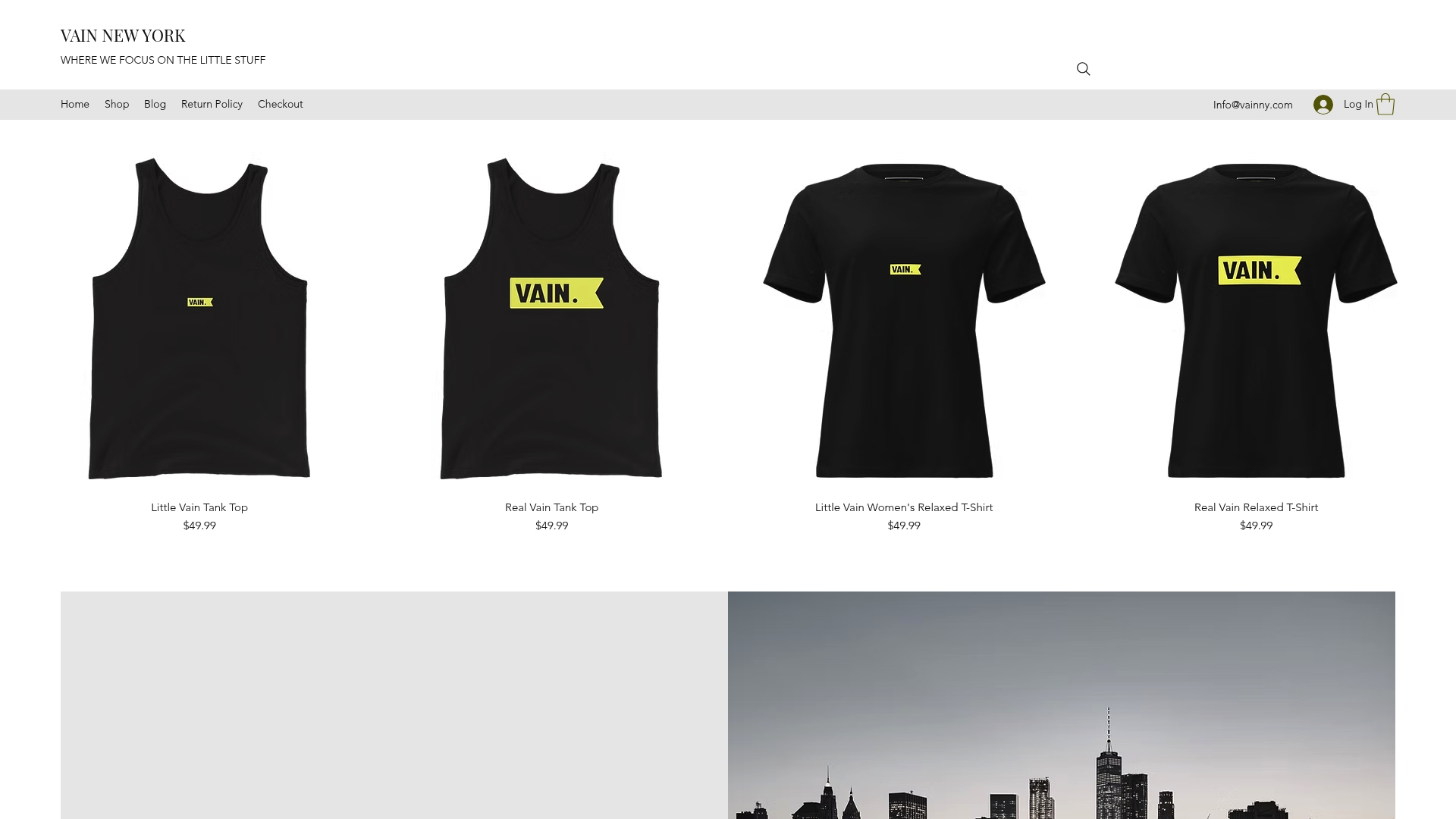
If your audit also reveals that your touchpoints need merchandise that carries the identity, our made-to-order studio apparel, including the Studio Hoodie at $99.99 and the Studio T-Shirt at $59.99, is available online.
FAQ
What should a brand audit include?
It should cover strategy and identity, messaging and voice, online presence and content, customer perception, competitive positioning, internal alignment and touchpoints. Brandwatch’s checklist groups the same areas. Each one needs evidence and a score, so that the output is a ranked list of gaps.
How often should you do a brand audit?
A full review makes sense before a rebrand, a launch or a move into a new market, and a lighter check once a year keeps drift in view. Keller argued for periodic audits so managers can track both what they offer and how customers see it. Repeating the same survey wording makes each round comparable.
What are the main steps to conduct a brand audit?
Define objectives and scope, gather internal data and assets, review competitors, survey audiences, assess consistency and reputation, report the findings and build an action plan. Frontify’s guide follows this same path. The five-step process above condenses it for a small team.
What questions should a brand audit ask?
Ask whether your mission and values show up in what customers see, whether messaging and visuals are consistent, whether customer experience matches the promise, and whether teams follow the guidelines. The checklist sections above give you around forty questions covering these themes. Add questions tied to your own goal.
Do I need a template?
A template saves time and keeps the review consistent. Question-based versions, like the Smartsheet template, organize the work into core, verbal and visual identity plus evaluation. The scoring table in this article is a ready-made start you can copy into a spreadsheet.
Sources
Recommended
Comments