Why Drop Culture Merchandise Works for Brand Managers


Drop culture merchandise is defined as limited-quantity, time-bound product releases engineered to create urgency, exclusivity, and social momentum around a brand. This model works because it activates three psychological forces simultaneously: scarcity, social proof, and identity signaling. The result is measurable. E-commerce brands using drop models see 40–80% higher engagement and 2–4x faster sell-through on limited products compared to evergreen inventory. That kind of performance gap is not accidental. Understanding why drop culture merchandise works gives brand managers a repeatable framework for driving both sales velocity and long-term community loyalty.
Why drop culture merchandise works: the psychology behind it
Drops succeed less on product features and more on timing, psychology, and identity signaling. That insight reframes how brand managers should think about merchandise strategy. The product is almost secondary. The experience surrounding its release is what drives consumer behavior.
Scarcity is the engine. When quantity is genuinely limited, perceived value rises. Research confirms that limited quantity scarcity drives higher willingness to pay premiums than limited time scarcity. This distinction matters for how you frame your drops. “Only 200 units available” outperforms “Available this weekend only” in motivating purchase decisions at full price.

Social proof accelerates urgency. When consumers see others purchasing or talking about a drop, they interpret that activity as a signal that the product is worth having. This creates a self-reinforcing loop where early buyers amplify demand for remaining units. A study of 564 consumers confirms that social signaling and scarcity together drive impulsive purchases of limited edition merchandise. Impulse buying is not irrational here. It is a rational response to real supply constraints.
Identity signaling completes the triad. Limited products function as status symbols and community badges. Owning a piece from a drop communicates taste, access, and belonging. That is why custom apparel built around exclusivity consistently outperforms generic merchandise in both sell-through rate and brand recall.
Scarcity effect: Limited quantity signals higher value and commands premium pricing.
Social proof racing: Visible purchase activity compresses decision time and reduces hesitation.
Identity signaling: Exclusive products become cultural artifacts that consumers wear as personal statements.
FOMO amplification: Fear of missing out converts passive interest into active purchase behavior within hours of a drop going live.
Pro Tip: Frame your drop around quantity, not time. “Only 150 units” creates more urgency than “48 hours only” because quantity scarcity feels more real and less manufactured to the consumer.
How do drops impact brand engagement and sales performance?
The data on drop performance is clear and consistent. Brands using drop models report 40–80% higher engagement rates and sell-through speeds 2–4x faster than standard product launches. That gap reflects the difference between passive browsing and active, motivated purchasing.
Waitlists are one of the most underused assets in drop marketing. Anticipation campaigns can generate waitlists exceeding 46,000 potential buyers. A waitlist is not just a queue. It is a demand asset, a segmented audience of high-intent consumers who have already self-selected as buyers. Every person on that list represents a conversion opportunity that costs nothing to maintain until launch day.
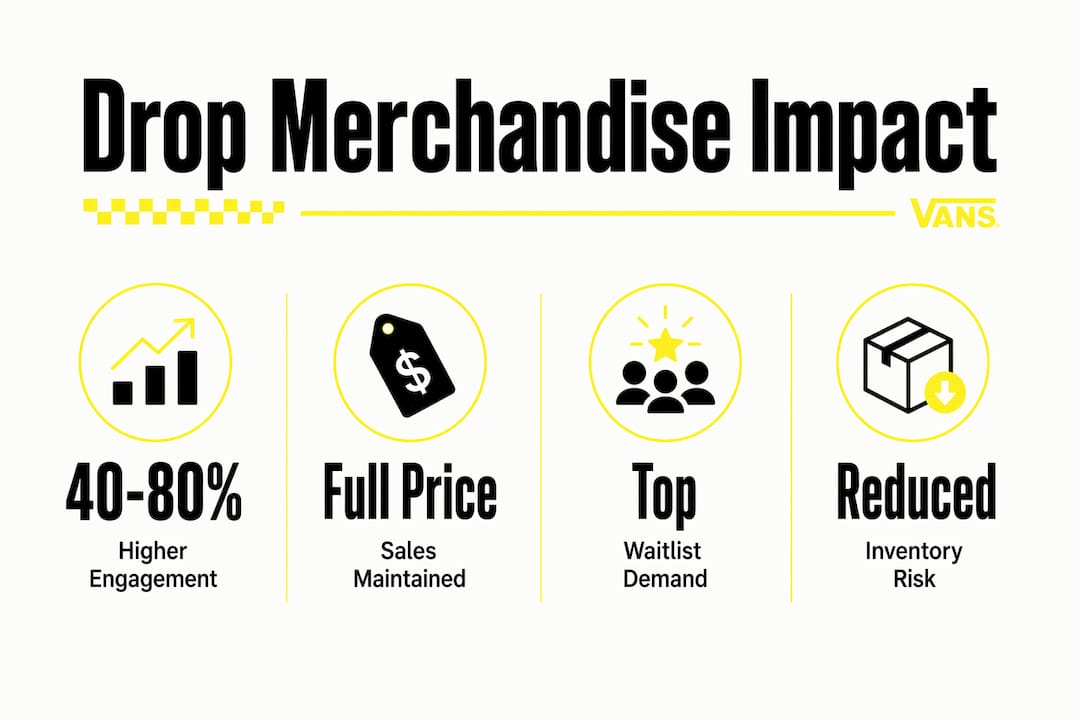
Drops also protect margin. Traditional retail relies on markdowns to clear inventory. Drops sell at full price because demand exceeds supply by design. The trade-off is volume, but the margin per unit is significantly stronger. That said, US apparel return rates average 24.4%, which can erode profit regardless of sell-out speed. Drops do not eliminate returns. They require the same attention to fit, quality, and sizing accuracy as any other channel.
Metric | Traditional Retail | Drop Model |
Engagement rate | Baseline | 40–80% higher |
Sell-through speed | Standard | 2–4x faster |
Pricing strategy | Markdown-dependent | Full price by design |
Demand visibility | Post-launch data | Pre-launch waitlists |
Return rate exposure | 24.4% average | 24.4% average (unchanged) |
Operational strain is the hidden cost. Fulfillment bottlenecks during drops can quickly erode brand goodwill despite strong demand. A sold-out drop that ships late or sends wrong items destroys the premium experience consumers paid for. The engagement numbers only translate to brand equity when the operational execution matches the hype.
What distinguishes genuine scarcity from manufactured scarcity?
Authenticity is the line between a drop that builds a brand and one that damages it. Authentic scarcity anchored in real constraints maintains consumer trust, while artificial scarcity can damage brand reputation. Consumers are perceptive. They recognize when a “limited edition” is simply a marketing label applied to a product that could easily be restocked.
Genuine scarcity has a credible narrative. It might be rooted in artisan production capacity, rare materials, a one-time collaboration, or a specific cultural moment. Each of these constraints is verifiable and communicable. When you tell consumers that a piece was produced in a single run of 300 units because the fabric supplier only had that much available, that story holds up. It gives the product provenance.
Manufactured scarcity lacks that narrative. Consumers perceive and reject artificial scarcity when it lacks a credible story, which undermines trust and repeat sales. A brand that repeatedly claims “limited edition” without a genuine reason trains its audience to distrust the label entirely. Once that trust erodes, the psychological mechanisms that make drops work stop functioning.
Genuine scarcity signals: Artisan production limits, rare or seasonal materials, single-run collaborations, cultural or event-specific timing.
Manufactured scarcity signals: Arbitrary unit caps with no production rationale, repeated “limited” claims on the same product, artificial countdown timers on items that restock immediately.
Drops also function as brand architecture tools, reserving core products for the mass market while positioning limited editions for collectors. This segmentation protects desirability. It lets a brand serve broad audiences without overexposing its most culturally resonant pieces.
Pro Tip: Build your scarcity narrative before you build your product. If you cannot explain in one sentence why this run is limited, your audience will not believe it either.
How can marketers apply drop culture strategies in practice?
Execution separates brands that generate hype from brands that convert it into revenue. The most effective drops follow a phased content structure: teaser, reveal, and release. AI-driven social media tools now allow brands to automate this phased content delivery, maximizing FOMO and purchase acceleration across platforms without requiring a full-time content team.
Here is a practical launch sequence for brand managers:
Teaser phase (2–3 weeks out): Release partial visuals, behind-the-scenes content, and cryptic messaging. Do not reveal the full product. Build curiosity and open your waitlist.
Reveal phase (5–7 days out): Show the product in full. Announce the unit count, the drop date, and the story behind the scarcity. Activate your waitlist with early access or exclusive previews.
Release phase (drop day): Send simultaneous notifications across email, SMS, and social. Create real-time urgency with live unit count updates. Respond to community activity immediately.
Post-drop phase: Celebrate sell-out publicly. Feature buyers. Begin seeding the next drop narrative to retain community attention.
Demand forecasting is non-negotiable. Waitlists give you pre-launch data on actual intent, not just impressions. Use engagement rates, click-through data, and waitlist size to calibrate your unit count. Producing too few units wastes demand. Producing too many undermines the scarcity that made the drop compelling.
Brand communities that develop their own cultural vernacular shift the marketing burden to consumers themselves. When buyers post, share, and discuss a drop organically, the brand earns reach it did not pay for. That community dynamic is the long-term asset. A single drop is a transaction. A community built around drops is a brand. Vainnewyork’s approach to merch drop strategy with collaborators reflects exactly this principle, using cultural momentum to extend reach beyond paid channels.
Pro Tip: Treat your post-drop content as seriously as your pre-drop content. Celebrating a sell-out publicly signals demand to people who missed the drop and primes them for the next one.
Key Takeaways
Drop culture merchandise works because scarcity, social proof, and identity signaling combine to create urgency that traditional retail cannot replicate, driving 40–80% higher engagement and 2–4x faster sell-through.
Point | Details |
Scarcity drives premiums | Limited quantity framing outperforms limited time in motivating full-price purchases. |
Waitlists are demand assets | Anticipation campaigns can build waitlists of 46,000+ buyers before a single unit ships. |
Authenticity protects trust | Genuine scarcity with a credible narrative sustains repeat engagement; manufactured scarcity destroys it. |
Operations determine outcomes | Fulfillment failures during high-demand drops erase the brand goodwill that the hype created. |
Community is the long-term asset | Drops that build cultural vernacular shift marketing costs to consumers and compound over time. |
Why drops are a long-term brand strategy, not a short-term tactic
I have watched brands treat drops as a one-time stunt and wonder why the results did not last. The mechanics of why exclusive drops appeal are not magic. They are psychology applied consistently over time. A single drop can spike sales. A series of drops, executed with discipline, builds a community that sustains a brand through market shifts.
The brands that get this right share one quality: they treat operational excellence as part of the creative work. The packaging, the shipping speed, the customer service response when something goes wrong. These are not logistics problems. They are brand experiences. When a consumer waits three weeks for a drop and the product arrives late in a damaged box, the scarcity narrative collapses. The premium they paid feels unjustified.
Authentic scarcity is also harder to maintain than it looks. I have seen brands exhaust their credibility within two years by over-dropping. When everything is limited, nothing is. The discipline to drop less frequently, with more intention, is what separates brands with lasting cultural weight from those chasing quarterly numbers. Community merchandise built around shared identity outlasts any individual product release because it gives consumers a reason to stay connected between drops.
The most durable drop strategies I have seen are the ones where the brand manager asks one question before every launch: “Would this be worth waiting for?” If the honest answer is no, the drop is not ready.
— Neville
Vainnewyork’s curated merchandise for drop culture campaigns
Vainnewyork builds merchandise collections designed for exactly the kind of cultural momentum that drop culture demands. Each piece is crafted to carry a story, not just a logo.
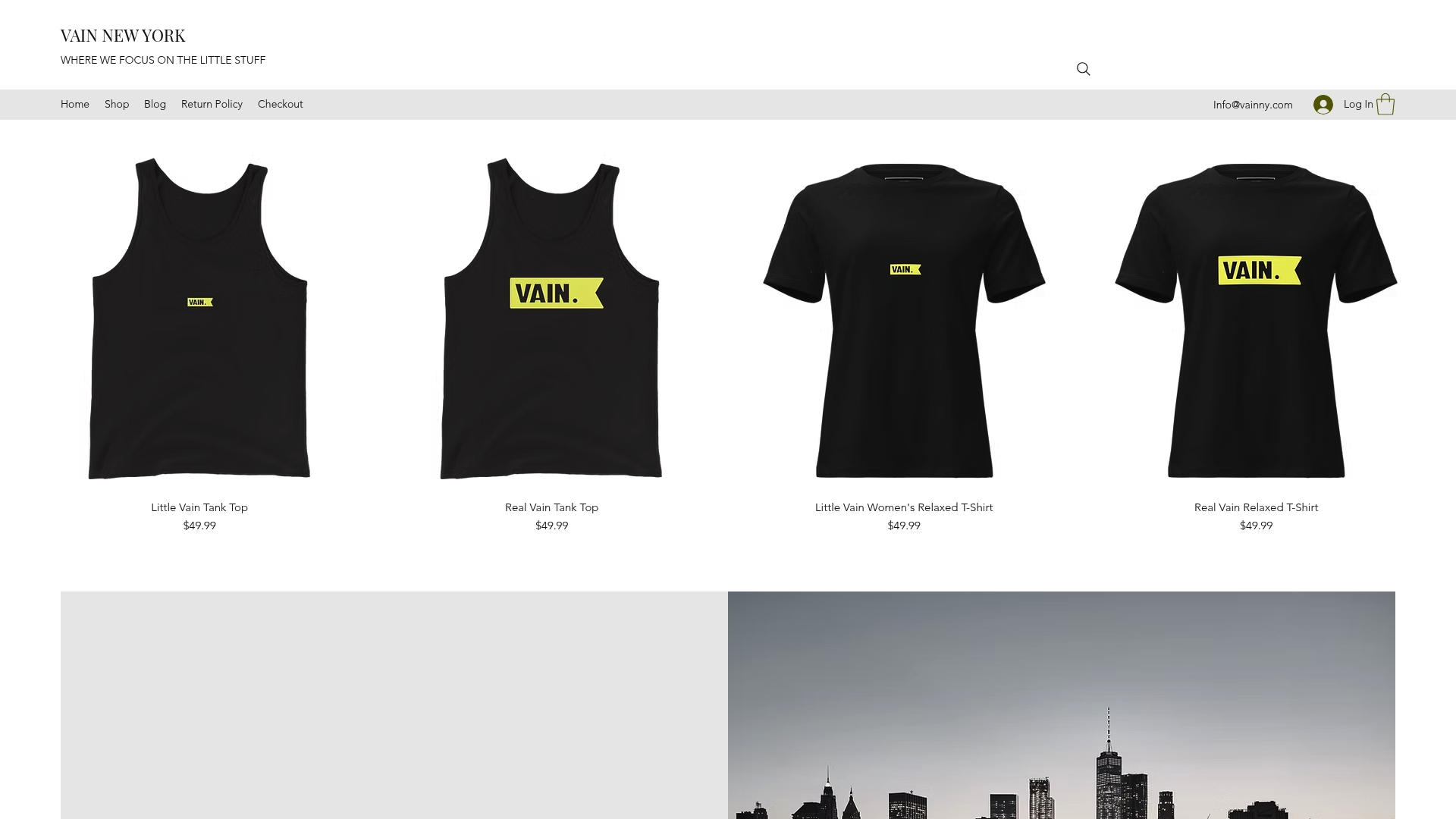
Brand managers looking to implement or scale a drop strategy can explore the Vainnewyork shop for curated merchandise that fits limited-edition positioning. The collections include apparel and art pieces built for scarcity-driven launches, including items like the Little Vain Auburn One-Piece, which exemplifies the kind of distinctive, collectible design that performs in drop environments. Whether you are planning your first drop or refining an existing program, Vainnewyork’s creative consultancy model connects brand managers with the content, collaboration, and production support that turns a product release into a cultural moment.
FAQ
What makes drop culture merchandise different from regular product launches?
Drop culture merchandise uses strict quantity limits and time-compressed releases to create urgency that standard launches cannot replicate. This drives 40–80% higher engagement and 2–4x faster sell-through compared to evergreen inventory.
Why does limited quantity scarcity outperform limited time scarcity?
Research confirms that limited quantity scarcity drives higher willingness to pay premiums than limited time scarcity. Quantity limits feel more real and credible to consumers because they signal a genuine supply constraint rather than a marketing deadline.
How do waitlists improve drop performance?
Waitlists convert passive interest into measurable, high-intent demand before launch day. Anticipation campaigns have generated waitlists exceeding 46,000 potential buyers, giving brands a pre-qualified audience and accurate demand data for production planning.
What is the biggest operational risk in running a merchandise drop?
Fulfillment bottlenecks during high-demand drops are the primary operational risk. Shipping delays and order errors erode brand goodwill quickly, even when the product itself sells out successfully.
How can a brand tell if its scarcity is authentic or manufactured?
Authentic scarcity has a verifiable, communicable reason for the unit limit, such as production capacity, rare materials, or a one-time collaboration. If a brand cannot explain in one sentence why the run is limited, consumers will recognize the scarcity as artificial and lose trust in future drops.
Recommended
Comments