Crew Management: Best Practices for Business Leaders


Crew management is defined as the strategic coordination of workforce scheduling, logistics, and compliance to keep operations running across industries like maritime, logistics, and event production. International trade accounts for over 80% of global goods flow, which means a single failed crew change can ripple across supply chains worldwide. That scale makes crew management one of the most consequential operational disciplines in any asset-heavy business. Standards like STCW, SOLAS, and the Maritime Labour Convention (MLC) set the compliance floor, and missing any one of them carries real financial and legal penalties.
What is crew management and why does it matter?
Crew management is more than staffing. It is a cross-discipline operation that fuses human resources, international logistics, and regulatory compliance into one coordinated system. Failing to treat crew change as an integral part of global logistics forces operators into emergency fixes that compromise both safety and efficiency. The cost of reactive management shows up as vessel downtime, regulatory fines, and crew welfare failures.
The industries that feel this pressure most acutely are maritime shipping, offshore energy, commercial aviation, and large-scale event production. Each sector runs on rotating workforces with fixed contract cycles, certification requirements, and geographic constraints. A maritime operator managing a fleet of tankers faces a fundamentally different coordination challenge than an HR director scheduling event crews, but the underlying discipline is the same: get the right person, certified and rested, to the right place on time.
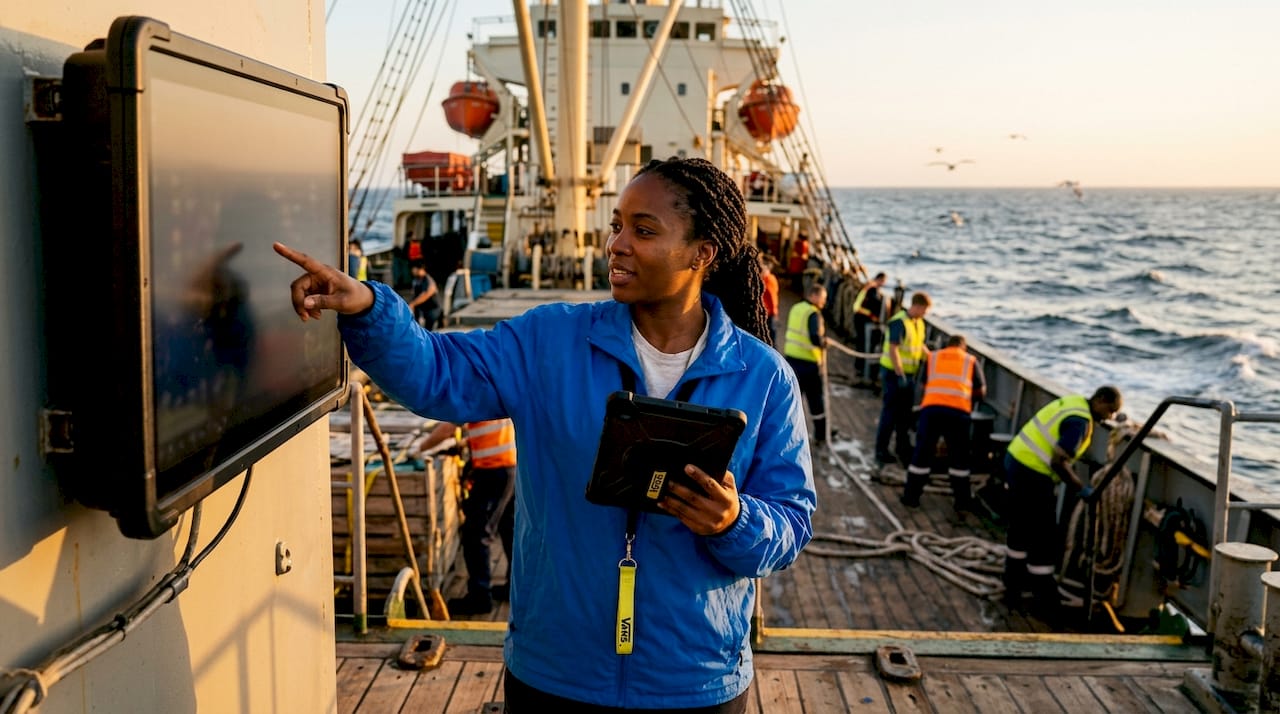
What tools and prerequisites does effective crew management require?
The foundation of any functioning crew operation is a synchronized schedule tied to a centralized data system. Manual coordination methods like email threads create bottlenecks and costly downtime. A shared database with real-time updates on crew status, vessel ETAs, flight arrivals, and certification expiry dates replaces that fragmentation with a single source of truth.
Specialized crew scheduling software is the primary tool category here. Generic corporate travel and expense platforms are built for individual bookings and per-trip approvals. Traditional corporate travel tools fail for crew operations because they cannot handle centralized billing by operations cost center or bulk logistics coordination. Operators need platforms purpose-built for crew, not adapted from tools designed for sales teams.
The table below outlines the core prerequisites and tools for a functioning crew operation.
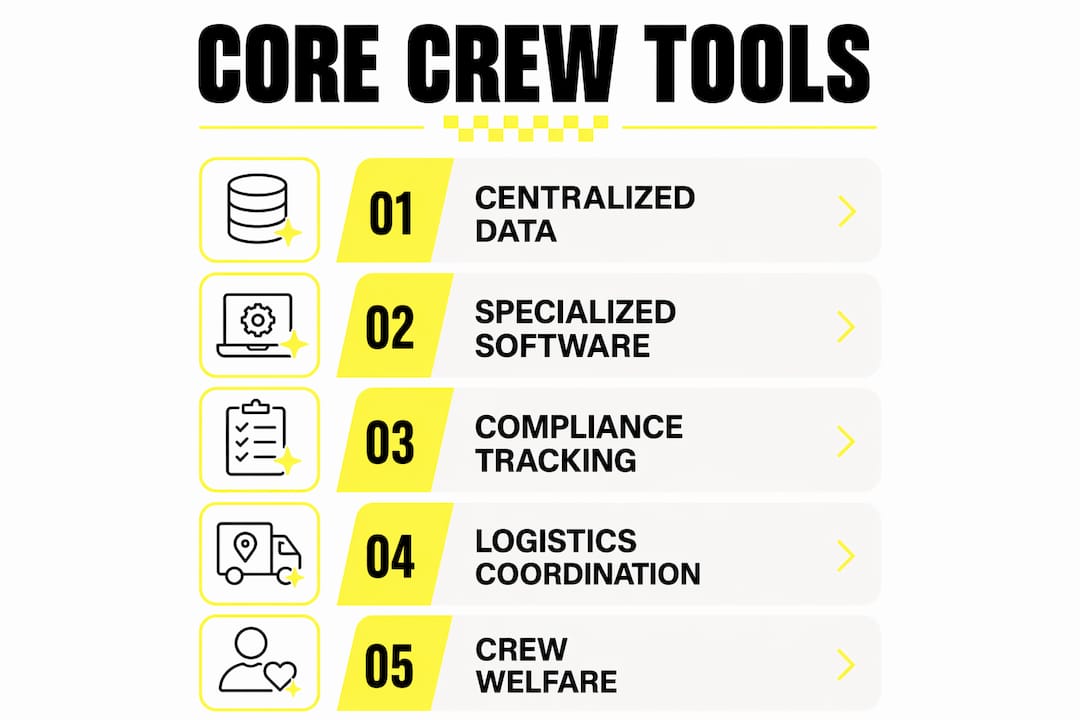
Prerequisite / Tool | Function |
Centralized crew database | Tracks certifications, contract status, and travel in one place |
Crew scheduling software | Automates rotation planning and flags compliance gaps |
Compliance tracking platform | Monitors STCW, SOLAS, and MLC certification expiry dates |
Multimodal logistics coordination | Synchronizes air, sea, and land transport for crew changes |
Real-time communication system | Keeps port agents, crew, and operations aligned during changes |
Key prerequisites before any platform goes live:
Vessel or shift schedules must be finalized and accessible to all coordinators
Crew contract lengths and rotation cycles must be defined in writing
Certification records must be digitized and stored in a searchable format
Port agent contacts and visa requirement databases must be current
How to plan and schedule crew to reduce delays and risks
Crew rotation cycles are the backbone of any scheduling plan. International tanker and container vessels execute crew changes every 4–6 months, often within port call windows as short as 4–6 hours. That constraint leaves almost no room for error in travel coordination, documentation, or certification status.
A structured planning process removes that risk. Follow these steps to build a schedule that holds under pressure:
Define rotation cycles. Set contract lengths by role and vessel type. Maritime officers typically rotate on 4-month cycles; ratings may run shorter or longer depending on flag state rules.
Map certification expiry dates. Pull every crew member’s STCW, medical, and flag state certificate expiry into the scheduling platform before building the rotation.
Align travel windows with port call schedules. Book flights and ground transport at least 72 hours before the vessel’s ETA to absorb delays.
Build in regulatory rest periods. MLC and STCW mandate minimum rest hours. Schedule these as fixed blocks, not afterthoughts.
Assign a single point of contact per crew change. One coordinator owns the full change: visas, flights, port clearance, and onboarding confirmation.
Run a pre-departure compliance check. Verify every document 48 hours before travel. Flag any gap immediately.
Pro Tip: Build a 24-hour buffer into every crew change schedule. Port delays, flight cancellations, and visa processing backlogs are predictable risks. A buffer absorbs them without cascading into vessel downtime.
What are best practices for crew documentation and compliance?
Documentation failure is the most common cause of crew change delays. Crew change involves visa issuance, certification tracking, port coordination, and multimodal logistics, and each stage carries its own document requirement. Missing a single certificate at the gangway can ground a crew change entirely.
The compliance standards that govern maritime crew management are specific and non-negotiable. STCW sets training and certification requirements for seafarers. SOLAS defines safety management obligations for vessels. MLC establishes minimum welfare, rest, and employment standards. Integrating these standards into automated scheduling workflows is the only reliable way to avoid delays and regulatory penalties at scale.
Best practices for documentation and compliance:
Digitize all certificates. Store STCW, medical, and flag state documents in a searchable, cloud-accessible system.
Set automated expiry alerts. Flag certificates expiring within 90 days so replacements are arranged before they affect scheduling.
Track visa requirements by port. Maintain a live database of visa rules for every port of call in your rotation.
Audit records quarterly. Run a full compliance audit every quarter to catch gaps before an inspection does.
Assign document ownership. Each crew member’s file should have one named coordinator responsible for its accuracy.
Pro Tip: Use a centralized document control system that sends expiry alerts to both the crew member and their coordinator. Dual notification cuts the risk of a certificate lapsing unnoticed by more than half.
How to coordinate crew logistics, travel, and welfare
Logistics coordination is where crew management either holds together or falls apart. Established crew management services can deploy professional crew globally within 48 hours, managing visas and pre-joining formalities at that pace. That capability requires pre-built relationships with port agents, airlines, and immigration authorities, not improvised calls on the day of travel.
The coordination process for a single crew change involves more moving parts than most HR teams expect. Here is a practical sequence:
Confirm vessel ETA with the port agent. All travel bookings depend on this anchor time.
Book multimodal transport. Coordinate flights, ground transfers, and any water taxi or launch service as a single itinerary.
Initiate visa applications. Start visa processing at least 10 business days before travel for complex jurisdictions.
Arrange crew accommodation. If the vessel arrives before the crew, or the crew arrives before the vessel, pre-booked lodging prevents stranded personnel.
Brief the incoming crew. Send a pre-joining information pack covering vessel procedures, safety drills, and local port rules.
Confirm sign-off logistics for the outgoing crew. Book their return travel before the vessel arrives, not after.
Debrief after each change. Capture what went wrong and what worked. Use that data to refine the next rotation.
Centralizing ETA data, crew flight arrivals, and certification requirements in one database eliminates the scheduling bottlenecks that cause most vessel downtime. The debrief step is the one most operators skip. It is also the one that compounds the most value over time.
Crew welfare is not a soft concern. Effective crew rotation and rest period management directly reduces fatigue-related accident risk onboard vessels. Fatigue is a documented safety hazard, and scheduling that ignores rest requirements creates liability, not just discomfort. Adopting an operational ownership model where crew managers control welfare, transport, and port clearances reduces administrative overhead and improves the quality of every vessel call.
Key Takeaways
Effective crew management requires integrated scheduling, compliance tracking, and logistics coordination working as one system, not three separate functions.
Point | Details |
Centralize crew data | One shared database for certifications, schedules, and travel eliminates costly bottlenecks. |
Use purpose-built software | Generic travel tools cannot handle crew operations; specialized platforms are required. |
Embed compliance in scheduling | STCW, SOLAS, and MLC requirements must be built into rotation plans, not checked afterward. |
Plan logistics 72 hours ahead | Book travel and port coordination well before vessel ETA to absorb predictable delays. |
Prioritize crew welfare | Rest period compliance reduces accident risk and protects the operator from regulatory liability. |
What I’ve learned from watching crew management done right and wrong
Neville here. After years of working across production and logistics environments, the pattern I keep seeing is this: organizations treat crew management as a staffing problem when it is actually a systems problem. They hire a coordinator, hand them a spreadsheet, and wonder why crew changes keep failing.
The operations that run well share one trait. They have built a system where every piece of information, certifications, travel bookings, port ETAs, visa status, lives in one place that everyone can see. The coordinator’s job becomes exception management, not data chasing. That shift alone changes the quality of every crew change.
The second thing I have noticed is that welfare gets treated as a compliance checkbox rather than an operational input. Fatigued crew make mistakes. Mistakes cost money and, in maritime and aviation contexts, lives. The operators who take rest period management seriously do not do it because regulators require it. They do it because they have seen what happens when they do not.
My honest advice: stop evaluating crew management tools on feature lists and start evaluating them on how well they centralize information and automate compliance alerts. The best system is the one your coordinators actually use because it makes their job easier, not harder.
— Neville
How Vainnewyork approaches creative workforce coordination
At Vainnewyork, we understand that coordinating talented teams across complex productions takes more than a schedule. It takes a system built on clear communication, defined roles, and the kind of creative infrastructure that lets people do their best work. The same discipline that drives great crew management in maritime and logistics applies directly to how we think about production coordination and team deployment.
Whether you are building out a content production team or looking for creative tools that support your brand’s operational needs, Vainnewyork brings that same precision to everything we do. Browse the full Vainnewyork shop to see how our creative products and resources support teams that move fast and work well together. Great work starts with the right foundation, and we are here to help you build it.
FAQ
What is crew management in simple terms?
Crew management is the coordinated process of scheduling, deploying, and supporting a rotating workforce while maintaining compliance with regulatory standards. It covers everything from certification tracking to travel logistics and welfare management.
How often do maritime crews typically rotate?
International tanker and container vessel crews rotate every 4–6 months, with crew changes often executed within port call windows as short as 4–6 hours.
Why can’t standard HR software handle crew management?
Standard HR and corporate travel platforms are built for individual bookings and per-trip approvals. Crew operations require centralized billing, bulk logistics coordination, and compliance tracking that generic tools cannot provide.
What compliance standards apply to maritime crew management?
The three primary standards are STCW, which governs seafarer training and certification; SOLAS, which sets vessel safety management requirements; and MLC, which establishes minimum welfare, rest, and employment conditions for crew.
How does crew welfare affect operational performance?
Proper rest period management and fatigue control directly reduce accident risk onboard vessels. Operators who treat welfare as an operational input, not just a compliance requirement, see measurable improvements in safety and crew retention.
Recommended
Comments