Media and Entertainment Industry Trends in 2026


The global media and entertainment industry is defined by three forces in 2026: AI-powered advertising, a mass migration of audiences to social and video platforms, and a surge in live, immersive experiences. Global industry revenue grew 5.3% in 2025 and is projected to reach $4.2 trillion by 2030, according to PwC’s Global Entertainment & Media Outlook. These shifts are not gradual. They are restructuring how content gets made, distributed, monetized, and consumed. For media professionals and enthusiasts tracking entertainment industry trends, understanding each force is the difference between leading the change and reacting to it.
What are the biggest entertainment industry trends reshaping media in 2026?
AI is no longer a back-office efficiency tool in media. It has become the primary value driver across content creation, advertising personalization, and audience targeting. Advertising spending is projected to rise from $1 trillion in 2025 to $1.4 trillion by 2030, with AI-powered formats leading that growth. That projection signals a fundamental shift in where media companies will find their revenue.
Three capabilities define AI’s role in the current entertainment market analysis:
Hyper-personalized advertising: AI enables brands to serve ads tuned to individual viewer behavior, mood signals, and content context. This precision commands higher CPMs and measurable return on ad spend.
Recommendation engines: Platforms use AI to predict what audiences want before they search for it, increasing session length and reducing churn on subscription services.
Dynamic content production: AI tools now assist in scriptwriting, video editing, and even music composition, compressing production timelines without eliminating the need for human creative direction.
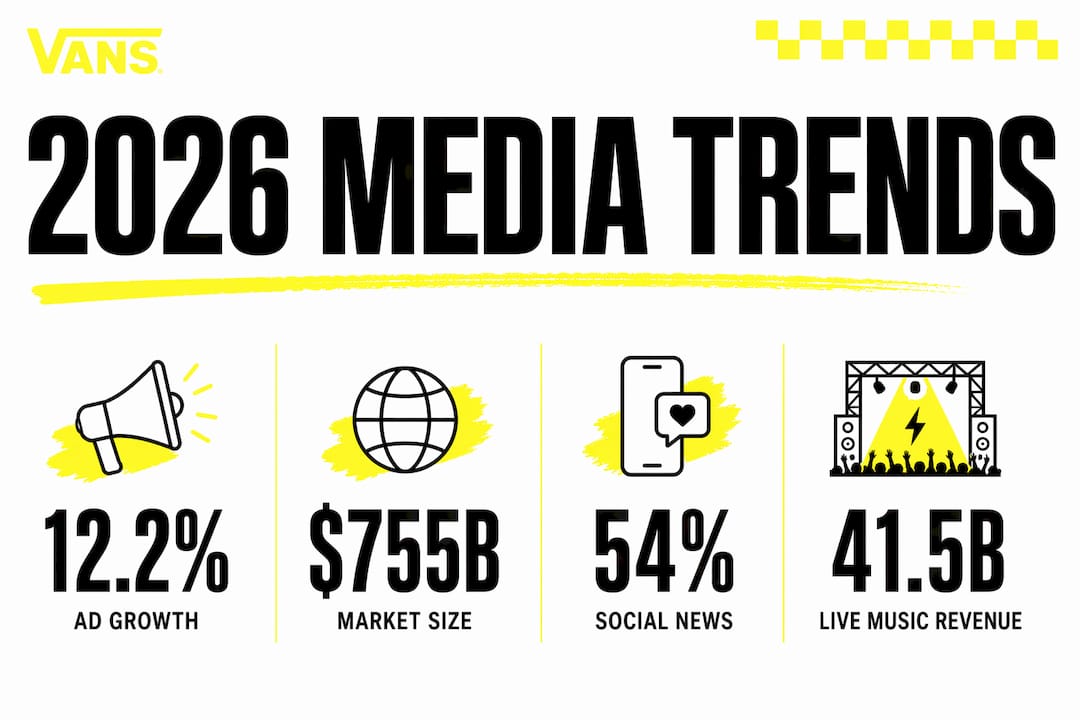
Global internet advertising grew 12.2% in 2025 to $755.6 billion. That rate of growth reflects advertiser confidence in AI’s ability to deliver measurable results at scale. Connected TV and shoppable video formats are the clearest beneficiaries, as AI transforms advertising from a cost center into a direct connection between brands and consumers.
Pro Tip: When integrating AI into your production or marketing workflow, assign a human creative director to review every AI-generated output. Automation accelerates production, but the emotional resonance that makes content memorable still requires a human eye.

The risk professionals face is over-automating. AI excels at pattern recognition and personalization. It does not yet replicate the cultural intuition that makes a campaign feel genuinely alive. The most effective media teams treat AI as a collaborator, not a replacement. Understanding your media mix strategy becomes critical when AI is influencing every channel simultaneously.
How is audience behavior changing media distribution and consumption?
Audiences have moved. 54% of respondents now access news primarily through social and video platforms, surpassing both traditional TV and publisher websites. TikTok alone has reached 20% news penetration globally. These numbers represent a structural change in how information and entertainment reach people, not a temporary trend.
The Reuters Digital News Report 2026 identifies four clear behavioral shifts driving this change:
Social platforms as primary discovery tools: Audiences find content through feeds and algorithms, not through direct navigation to publisher sites.
AI chatbot news consumption rising: Weekly AI chatbot news use grew from 7% in 2025 to 10% in 2026, signaling a new category of media consumption entirely.
Trust declining on social platforms: Even as audiences migrate to social for news, trust in content found there remains lower than in traditional outlets.
News avoidance increasing: Audiences actively filter out news they find overwhelming or emotionally draining, creating engagement gaps for publishers.
“The most consequential theme of 2026 is the ‘platformisation of the news experience,’ which is fundamentally shifting audience engagement and business models for publishers who built their strategies around direct audience relationships.” — Reuters Digital News Report 2026, via INMA
The creator economy plays a complementary role here. Independent creators on YouTube, TikTok, and Instagram now function as de facto news and entertainment distributors, often reaching audiences that traditional outlets cannot. This is not a threat to professional media so much as a redistribution of attention. Publishers and studios that adapt their social content for platform-native discovery will retain relevance. Those that treat social as a secondary channel will lose ground quickly.
Brands not adopting social SEO risk invisibility on discovery algorithms. Optimizing captions, on-screen text, and metadata for platform search is now as critical as traditional SEO was a decade ago.
Why are live experiences gaining value as social currency?
Live, shared reality experiences have become the entertainment segment audiences are least willing to give up. Live music revenue is projected to top $41.5 billion by 2030. Trade shows are on track to reach $44.6 billion. Online gambling doubled to $79.5 billion by 2025. Each of these segments shares one quality: they offer something a screen alone cannot replicate.
Segment | 2030 Projection | Key Driver |
Live music | $41.5 billion | Social sharing and cultural identity |
Trade shows | $44.6 billion | Professional networking and product discovery |
Online gambling | $79.5 billion (2025) | Real-time interactivity and community |
Consumers prize immersive, emotional experiences and will continue fueling demand for real-world, shared reality events. Younger audiences in particular treat live event attendance as social currency. The experience itself is content. A concert becomes a TikTok. A trade show appearance becomes a LinkedIn story. This loop between live events and social broadcasting amplifies the value of both.
Pro Tip: If you produce or market live events, build the social broadcast moment into the event design itself. Create a visual set piece or a shareable moment that attendees will naturally film and post. The live experience and the digital content it generates are one product, not two.
Emerging business models are combining digital and physical experiences in ways that were not commercially viable five years ago. Hybrid events with real-time digital participation, immersive venue installations, and branded live activations are all growing categories. For media professionals, the lesson is clear: the future of entertainment is not purely digital. Physical presence carries a premium that no streaming platform can fully match.
How are monetization models evolving across the entertainment sector?
Streaming subscription growth has slowed, and the industry has responded with hybrid monetization. The dominant models in 2026 break into three categories, each with distinct audience and revenue implications.
Model | Revenue Source | Best For |
SVOD (Subscription Video on Demand) | Monthly subscriber fees | Premium content libraries with loyal audiences |
AVOD (Advertising-Based Video on Demand) | Ad revenue from free viewers | Broad reach and advertiser-funded content |
Transactional (TVOD) | Pay-per-view or rental fees | New releases and event-driven content |
Subscription fatigue is real. Audiences are unwilling to maintain five or more separate subscriptions, which has accelerated bundling. Major platforms now package streaming, music, gaming, and news into single subscription tiers. This consolidation benefits large platform operators and squeezes independent publishers who relied on direct subscription revenue.
Advertising’s share of OTT revenue is growing. Connected TV formats allow advertisers to target with the precision of digital while reaching audiences at the scale of traditional television. Advertising is projected to surpass consumer spending as the dominant entertainment revenue source in 2026. That shift changes the incentive structure for content creators and distributors alike.
Independent producers face additional pressure from distribution scarcity. Only about a dozen films from more than 90 Sundance 2026 premieres secured distribution deals. That ratio illustrates how competitive the distribution layer has become. Securing a deal early, before a festival run, is now a recognized survival strategy rather than a fallback option. For those navigating media production in this environment, understanding distribution economics is as important as the craft itself.
Production economics also contain hidden costs that headline numbers obscure. Georgia’s film tax credit, for example, nets producers only 26.9 cents on the dollar after broker fees. Producers who plan budgets around the headline credit percentage consistently overshoot their actual savings.
Key Takeaways
The entertainment industry in 2026 rewards professionals who treat AI as a creative collaborator, build for platform-native discovery, and recognize that live experiences generate irreplaceable cultural value.
Point | Details |
AI drives ad revenue growth | Global advertising will reach $1.4 trillion by 2030, led by AI-powered personalization and connected TV formats. |
Social platforms dominate news discovery | 54% of audiences now access news via social and video platforms, making platform-native content strategy non-negotiable. |
Live experiences command a premium | Live music, trade shows, and immersive events are growing fast because they generate social currency no digital format replicates. |
Hybrid monetization is the new standard | SVOD, AVOD, and transactional models now coexist, with advertising set to surpass consumer spending as the top revenue source. |
Distribution scarcity is a real risk | Independent producers must secure distribution deals early, as only a small fraction of festival premieres land deals each year. |
What I’ve learned about thriving when the industry shifts beneath you
We have watched the media industry reinvent itself more than once, and the pattern is always the same. The professionals who struggle are the ones waiting for the dust to settle before they move. The ones who thrive are already building on the new terrain.
AI is not the threat it is often framed as. The real threat is treating it as a shortcut rather than a craft tool. The teams at Vainnewyork that produce the most resonant content are the ones using AI to handle the repetitive structural work, freeing human creativity for the moments that actually move people. That balance is not automatic. It requires deliberate creative leadership.
Platform shifts are uncomfortable, but they are also opportunities. When TikTok becomes a primary news source, that is not a crisis for storytellers. It is a new stage. The question is whether you are writing for that stage or ignoring it. The content strategies that work in 2026 are built around platform behavior, not repurposed from 2019 playbooks.
Live experience is the one area where I would tell every media professional to invest more attention than they currently do. The data is clear, but the deeper truth is cultural. Audiences are hungry for shared moments that exist beyond a screen. That hunger is not going away. Build for it.
— Vain.
How Vainnewyork supports your media and content strategy
The shifts reshaping media in 2026 require more than awareness. They require a creative partner who understands both the craft and the business behind it.
Vainnewyork operates at the intersection of content creation, brand development, and audience growth. Whether you are rethinking your distribution approach, building a content program for platform-native audiences, or developing a live experience strategy, the work starts with a clear creative vision. Explore the full range of Vainnewyork’s creative offerings and see how we translate industry insight into content that connects. The future of entertainment belongs to those who create it with intention.
FAQ
What is driving entertainment industry revenue growth in 2026?
AI-powered advertising is the fastest growing revenue segment, with global ad spending projected to reach $1.4 trillion by 2030. Live experiences including live music and trade shows are the second major growth driver.
How has audience news consumption changed in 2026?
54% of audiences now access news primarily through social and video platforms, with TikTok reaching 20% news penetration globally. Traditional TV and publisher websites have both declined as primary news sources.
What is subscription fatigue and how does it affect streaming?
Subscription fatigue describes audiences’ reluctance to maintain multiple paid streaming services simultaneously. It has accelerated platform bundling, where music, video, gaming, and news are packaged into single subscription tiers.
Why are live events considered social currency for younger audiences?
Live events generate shareable content that audiences post across social platforms, making attendance a form of cultural identity. PwC research confirms that consumers prize immersive, emotional experiences and will continue driving demand for real-world events.
How can independent filmmakers navigate distribution scarcity?
Securing distribution deals before or during a festival run is now a recognized strategy, given that only a small fraction of major festival premieres land deals each year. Early deal-making reduces dependence on post-festival market conditions.
Recommended
Comments